BUILT FOR
ENDURANCE
ATHLETES.
Two gyms. 280 sqm of training and rehabilitation space. The same equipment used by NRL clubs, Olympic programs, and professional endurance athletes — in Five Dock's Inner West.
Rehab and Performance.
Under One Roof.
Most physio clinics have a treatment room and a small gym. Triduro has two dedicated spaces — one for clinical rehabilitation, one for performance training — so your program doesn't have to compromise between the two.
A dedicated clinical rehabilitation space where your physio-led program begins. Squat racks, full dumbbell and kettlebell range, leg press, knee extension, and prone knee flexion machine. Every piece of equipment selected specifically for injury rehabilitation progressions — from post-surgical early loading through to return-to-training clearance.
A full athletic performance facility equipped for serious endurance training and sport-specific conditioning. Four squat racks, sled, ski erg, rowing machine, assault bike, treadmill, anti-gravity treadmill, force plates, VALD ForceFrame, flywheel trainer, VBT device, and a complete dumbbell, kettlebell, and machine range. 220 sqm gives us the space to train how endurance athletes actually need to train.

Built for Clinical
Rehabilitation.
The rehab gym is where your physio program is executed. Every exercise, every progression, every loading decision — supervised and structured by your clinician. No shared floor space with general gym members. Your rehab, uninterrupted.
For lower limb rehabilitation progressions — goblet squats, split squats, back squats, and single-leg variations. Adjustable to suit any stage of rehabilitation from early post-op through to full loading.
Full range for unilateral strength work — critical for endurance athletes where asymmetry between left and right limbs underpins most overuse injuries. Single-leg RDLs, step-ups, lateral loading patterns.
Low-impact knee loading for early quad activation and progressive lower limb strengthening. Particularly useful for stress fracture and post-surgical patients who need load without axial impact.
Isolated quadriceps loading. Used in tandem with VALD ForceFrame testing to drive quad strength symmetry — a key return-to-run milestone for runners recovering from knee and hip injuries.
Isolated hamstring curl loading in the prone position. Essential for hamstring strain rehabilitation, where isolated eccentric and concentric loading progressions determine safe return to running speed.
BFR training allows significant hypertrophic and strength gains at loads as low as 20–30% of 1RM. For endurance athletes in early rehab where full loading is contraindicated, BFR maintains muscle mass and strength without stress on healing tissue.
Where Athletes
Train.
The performance gym is where rehabilitation ends and athletic performance begins. Once your clinical milestones are met, this is where you build the fitness, strength, and capacity to not just return to sport — but return better.
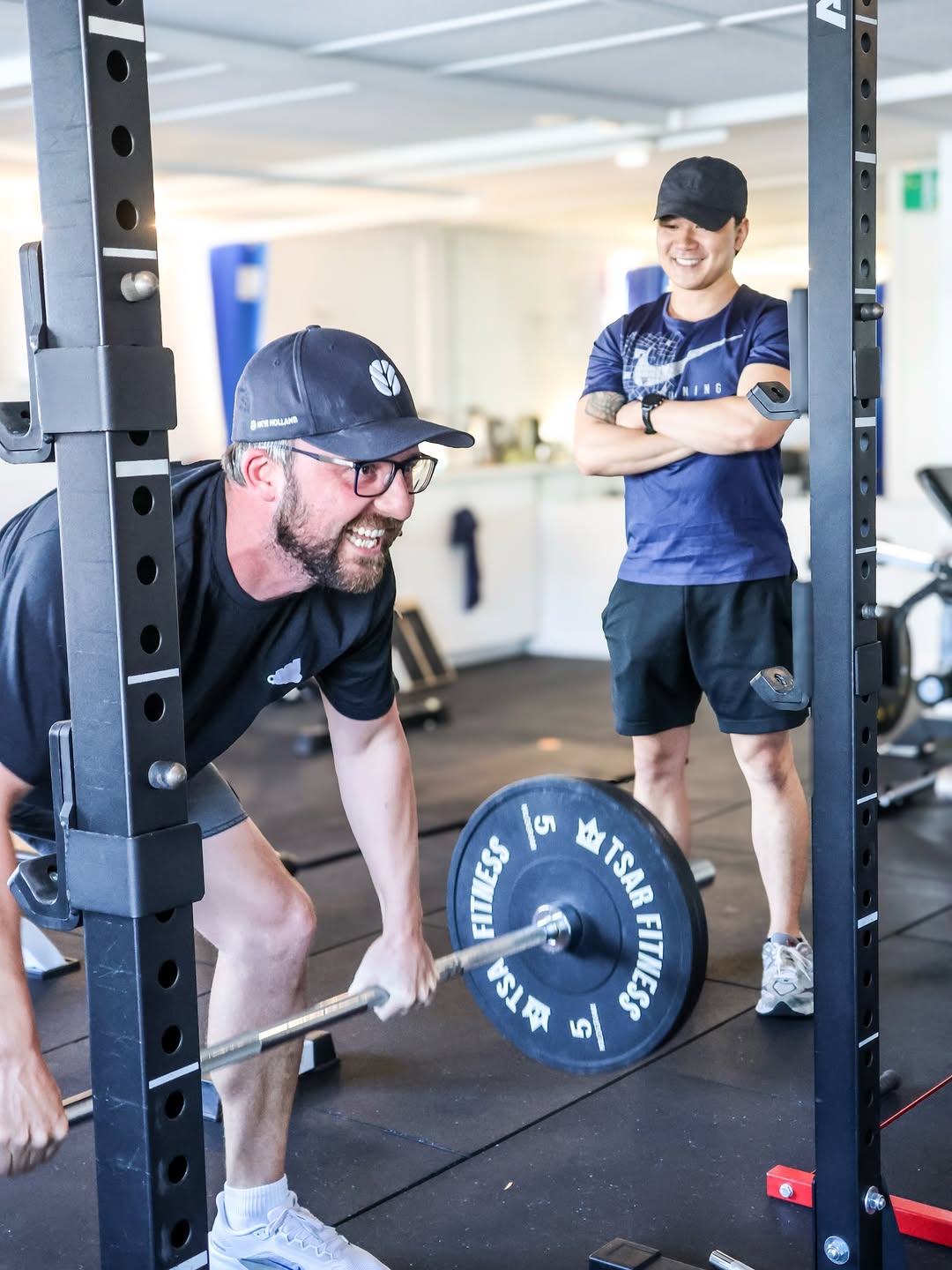
Four racks means no waiting. High-load strength work for athletes at the performance end of rehabilitation and S&C programming — back squats, front squats, RDLs, and Olympic lifting variations.
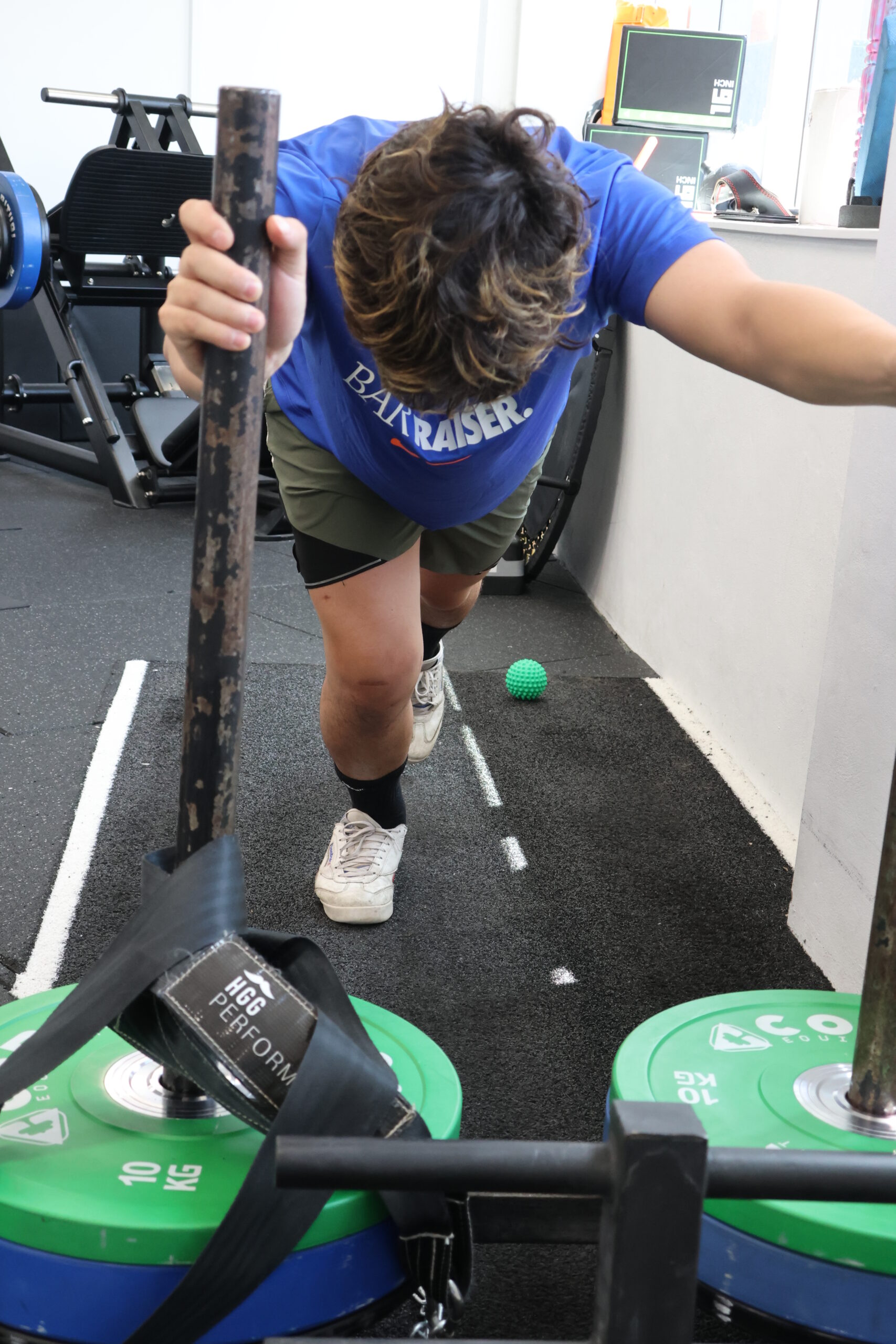
Sled pushes and pulls for hip extension power, acceleration mechanics, and general athletic conditioning. Low spinal load relative to force output — ideal for runners building power without compressive risk.
High-intensity upper body and core conditioning. For endurance athletes managing lower limb injuries, the ski erg maintains cardiovascular fitness and muscular endurance without any lower limb load.
Full-body aerobic conditioning. Particularly useful for triathletes and cyclists maintaining fitness during lower limb injury, and for building posterior chain endurance as part of running-specific programming.
Upper and lower body combined conditioning. The assault bike's self-regulated resistance makes it ideal for interval-based cardiovascular work without the impact load of running — a critical tool for injured runners maintaining VO₂ base.
Flywheel (inertial) training for eccentric overload — producing greater muscle adaptations per rep than traditional resistance training. Particularly effective for hamstring and Achilles tendon rehabilitation in endurance athletes.
Velocity-based training allows us to prescribe and monitor training intensity in real time. For athletes returning to heavy strength work, VBT ensures loading is optimal — not too conservative, not too aggressive.
Standard treadmill for return-to-run progressions at controlled speed and gradient. Used alongside anti-gravity treadmill sessions for progressive loading back to full bodyweight running.
Isolated leg extension and hamstring curl in the performance gym — allowing high-load isolated work alongside compound movements as athletes progress through later rehabilitation phases.
We Don't Guess.
We Measure.
Most clinics rely on subjective assessment to determine when an athlete is ready to return to training. We use data. Our testing suite gives us objective, measurable answers — so return-to-sport decisions are based on evidence, not instinct.

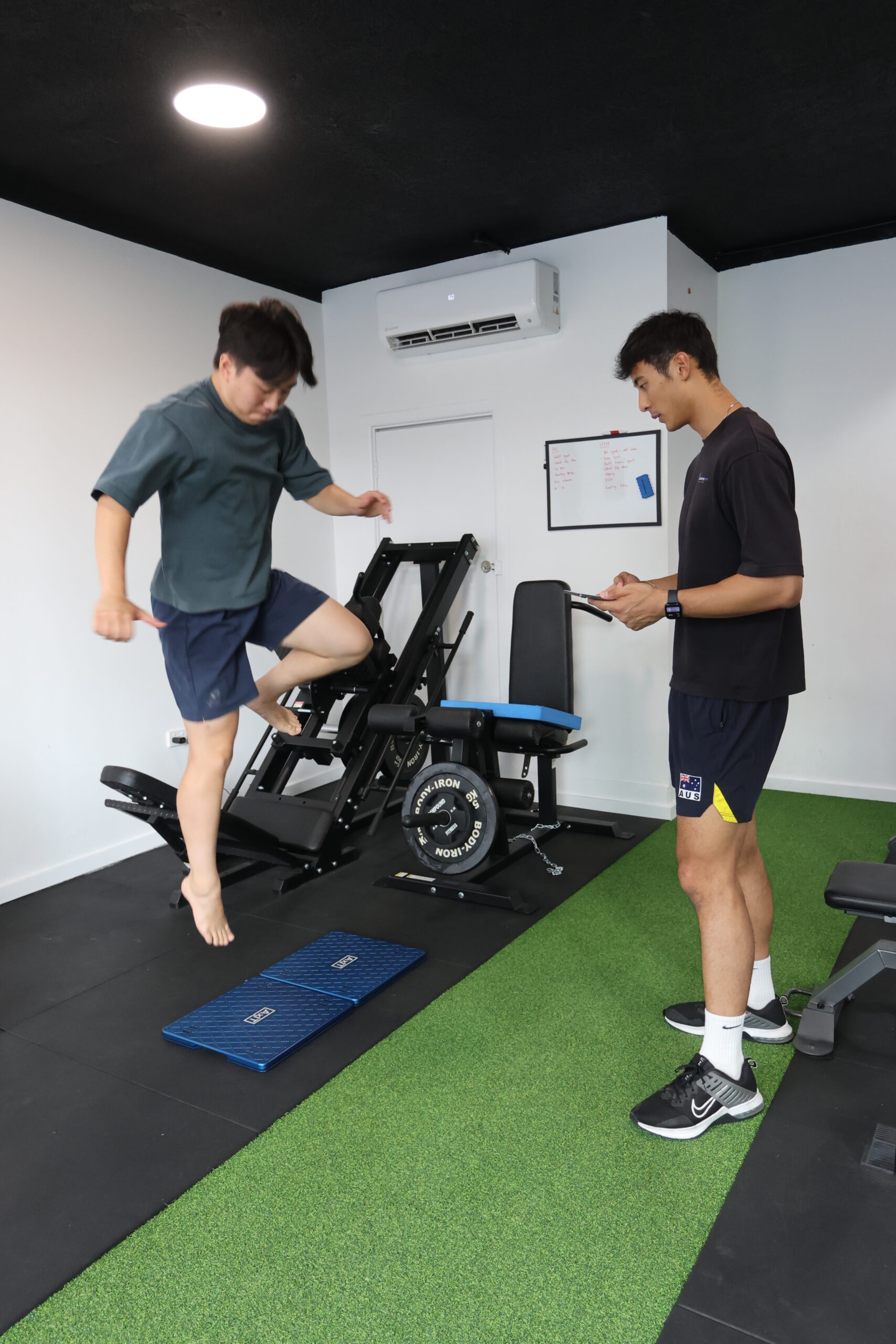
Measures force output, landing mechanics, and limb symmetry during jump and hop tasks. A bilateral asymmetry above 10–15% at return-to-run clearance significantly predicts re-injury. We test it. We treat it. We test it again.
Return-to-run clearanceIsometric testing for quad, hamstring, and hip abductor strength. The most direct measure of muscular recovery after injury or surgery. Tested at every phase of rehabilitation — not just at the end.
Strength symmetry trackingReal-time bar velocity monitoring during resistance training. Tells us exactly how hard an athlete is working on each rep — allowing precise load prescription and fatigue monitoring throughout a session.
Training load optimisationSingle-leg hop, triple hop, crossover hop, and timed hop — a validated four-test return-to-sport battery. Combined with force plate and VALD data, this gives us a comprehensive picture of readiness.
Return-to-sport clearanceTechnology That Changes
What's Possible.
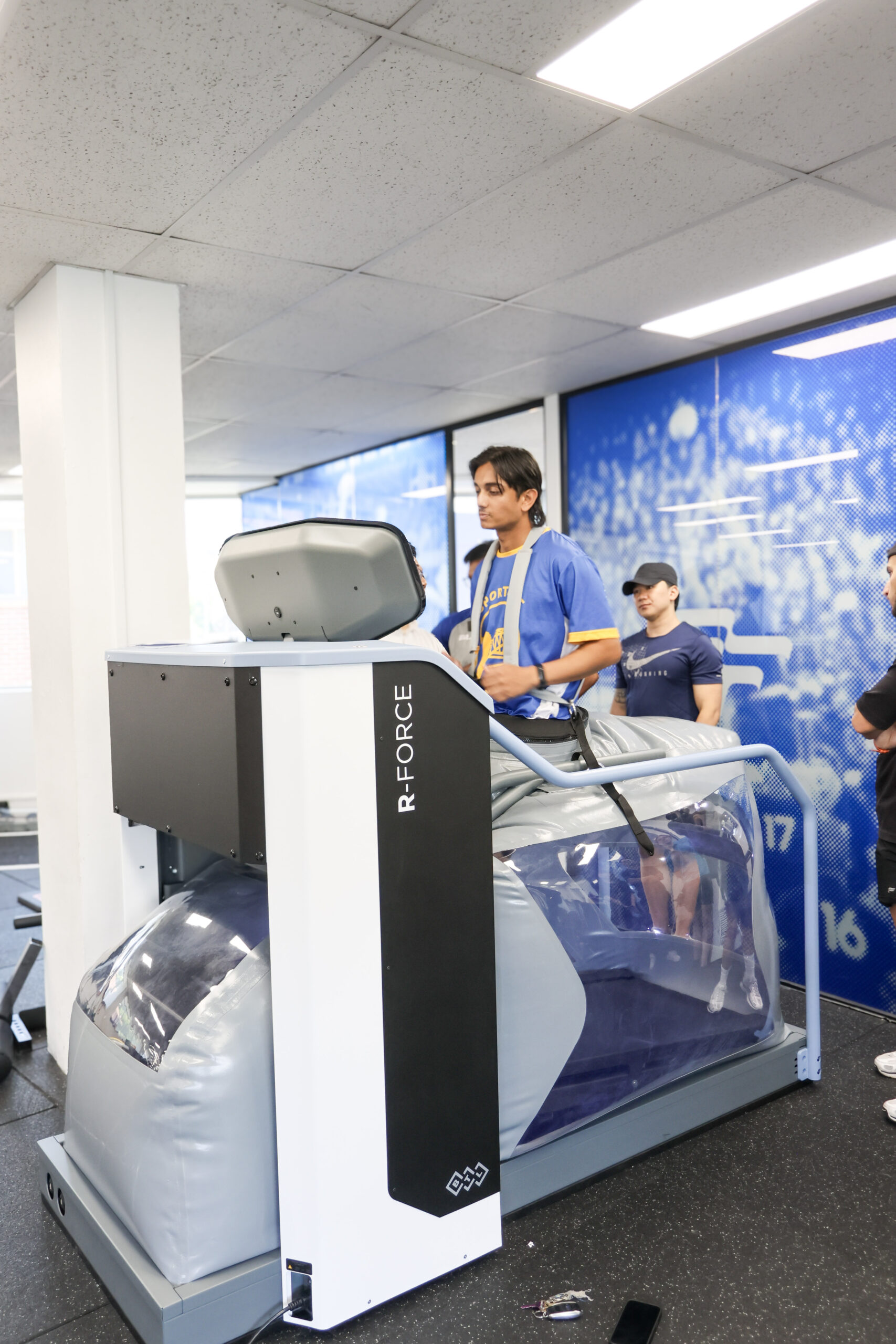
Load Smarter.
The BTL Anti-Gravity Treadmill allows endurance athletes to run at bodyweight percentages from 20% to 100% — maintaining running mechanics, cardiovascular fitness, and neuromuscular patterns weeks earlier than traditional rehabilitation allows.
- Stress fracture management — maintain running fitness while the bone heals
- Post-surgical return to run — protect the repair, preserve the mechanics
- Overuse injury load reduction — train through injury without making it worse
- Gait retraining — correct mechanics under reduced load before reintroducing full impact
- Cardiovascular maintenance — keep your aerobic base throughout rehabilitation

Not Just the Symptoms.
Extracorporeal shockwave therapy (ESWT) is one of the most evidence-supported treatments for chronic tendinopathy and plantar fasciitis — conditions that affect endurance athletes disproportionately. The BTL shockwave device delivers radial and focused shockwaves directly to the affected tissue, stimulating collagen synthesis and biological healing in tendons that have stopped responding to load alone.
- Achilles tendinopathy — mid-portion and insertional
- Plantar fasciitis and heel pain
- Patellar tendinopathy (jumper's knee)
- Hamstring tendinopathy
- Tibial stress reactions and periostitis
- Greater trochanteric pain syndrome
Come and See It.
Book a free call and we'll walk you through the facility, explain how each piece of equipment applies to your training and injury history, and build a program around it.
Book a Free CallNo referral needed · Five Dock, Inner West Sydney · Health fund rebates available
 TRIDURO by SportsFit